
4.5K
Downloads
127
Episodes
Radio and audio media history, commentary, analysis. Researched, written, hosted and produced by Paul Cross.
Episodes

Apr 23, 2020
Apr 23, 2020
8 min
"How Radio adapts in the Time of the Pandemic" - from April 17, 2020. Continuing my examination of radio's response to the Covid-19 pandemic in 2020. Previous episodes include reference to special programming, and to radio hosts performing from home. In this episode, a former talk show host -- the current mayor of Toronto -- returns to the air to host a one-time call-in show; and two morning co-hosts share their story of adjusting to broadcasting from their basements at home. Makes fair use of audio from Newstalk 1010 Toronto. Thank you to Samantha Houston and Neil Hedley of AM740 CFMZ Zoomer Radio in Toronto for responding to my request for their participation by recording together and sharing their stories.
Apr 9, 2020
Apr 9, 2020
5 min
What if Radio was not there? From April 8, 2020. What if you turned on the radio and there was...nothing there? Unthinkable. In the time of the covid-19 pandemic, local radio is doing more and more to keep listeners informed, entertained and comforted. No other form of media is going to talk about radio the way radio is talking about them. But it's been that way for a long time. Me? I love to talk about Radio. Here we go.
No use of audio this time. Because what if...there was nothing there?
Apr 3, 2020
Apr 3, 2020
5 min
"On how it took a crisis to make government communication more accessible in Canada.” From April 2, 2020. In the daily public briefings about the covid-19 held by government and public health authorities in the city of Toronto, the province of Ontario, and the federal government of Canada, a sign language interpreter is participating. They should have been routinely included in public announcements and briefings for many years now; perhaps decades. But their appearance has been unusual. Until now. It seems it has taken a real public health emergency to bring American Sign Language translation and interpretation into the strategic communications approach of public bodies in Canada. Sign language that fits use by local populations everywhere should be part of the communication. While we're thinking about this more "accessible" communication approach, let's also get rid of some nasty old discriminatory language, too.
Opens with audio from daily briefing by Ontario Premier Doug Ford, as he recognizes the work of ASL interpreter Christopher Desloges.
The full scripts of this episode -- and others, starting with Season Four Episode 10, are also available at https://paulcrossradio1.wordpress.com Beginning now, any audio embedded in the podcast is shown transcribed in the script on the Wordpress site.
Mar 26, 2020
Mar 26, 2020
7 min
"On listening to the news about government response to covid-19". From March 25, 2020. Commentary. This episode shifts toward the commentary spectrum as I react to updates I hear on the news, in order to demonstrate what constitutes commentary for radio in Canada. It's designed to fit with a course I teach in spring semester -- online now, during covid-19 -- in which radio news students will write and produce -- perform! -- a radio commentary as their final assignment. (I think they'll have a lot to say!) Based on Canadian laws that apply, this piece qualifies as fair comment, and meets all the other tests a radio commentary writer needs to consider. May be of use in courses in radio, news production, journalism, broadcasting, public relations, media studies, communication studies. Makes fair use of the opening sounder and first 20 seconds of CBC Radio 1 World Report from 8am March 25/20.
For an examination of radio commentary in Canada, please revisit Season One, Episode Nine.
Mar 18, 2020
Mar 18, 2020
11 min
"On local Radio in the time of covid-19". From March 17, 2020. In the midst of a pandemic of the covid-19 corona virus, most of what makes up "normal" activity for hundreds of millions of people is disrupted. Sports, late-night tv talk, restaurants, bars and theatres are closed. People still need routine. Radio can be a big part of that. While every news outlet in every form of media works extra-hard under difficult circumstances, Radio can continue to adapt and do even more. Some thoughts from my career in crisis-coverage in radio. While radio keeps up its daily routine, providing news, information, entertainment, comfort, and companionship...it should bring in more. Stephen Colbert and other late-night tv hosts should move to radio.
This is the first episode produced entirely at home; different software, and a few issues to work out. Just like radio.
Mar 13, 2020
Mar 13, 2020
9 min
"On Covid-19 in the News". From March 12, 2020. One could make the case that "everything changed" in the 24 hours connecting March 11th and 12th. Professional sports, concerts, public events, even tv talk shows started disappearing in the hours after the World Health Organization started describing the Covid-19 corona virus spread as a pandemic. Radio must remain and keep on doing what it does; we need that sense of carrying on. In this episode, a thumbnail sketch of some aspects of news coverage on radio and the atmosphere that had been created around coverage in North America by the actions of the U-S president. And some questions about news coverage in Canada -- including, why are broadcasters not reporting the federal health minister expects up to 70 per cent of the population could become infected? How did the national wire service not see that as a major development in the story? Makes fair dealing use of bits of broadcast audio from CFTR 680News, Newstalk1010 CFRB, BBC World Service, CBC Radio One.
Radio: Keep on doing what Radio does best. Students of Radio: Listen up! This is a unique opportunity to really examine what radio does in times of crisis.
Mar 7, 2020
Mar 7, 2020
11 min
"On the pioneering innovations in radio by Hilda Matheson". From March 6, 2020.
Whether many people working in radio and audio media including podcasting today are aware of this or not, many of our contemporary approaches to professional practice stem from the vision of a woman who is one of the great pioneers of radio. And they’ve been in practice, for almost a century. The opening montage is a reflection of this.
On World Radio Day this year – February 13th – I explored the United Nations Educational, Scientific and Cultural Organization’s theme of diversity in radio. That's in Season 4, Episode 5. The UNESCO focus includes diversity among radio news workers. One of the themes within that is certainly women in radio news. I pointed out news directors at several major radio stations in Toronto are women; there are women who are corporate executives in radio news here; and certainly, there’s a need for growth.
Now, for International Women’s Day – another United Nations initiative – I want to bring back to focus some of the enduring radio and audio media practices, shaped by the innovations of a woman who was a pioneer of radio, as early as 1928. I’m going to be looking back to Season 2, Episode 6.
I think everyone working in radio today, and those in non-fiction podcasting and audio media, should learn about the life and times and innovations…of Hilda Matheson.
Makes use of bits of the "Week in Westminster" from BBC (2019). Refers to "Radio Girls" by Sarah-Jane Stratford (New American Library, 2016), "Broadcasting" by Hilda Matheson (Home University Library, Thornton Butterworth, 1933) and my review https://paulcrossradio1.wordpress.com/2017/01/28/how-a-novel-about-radio-becomes-a-valuable-resource-for-teaching-and-learning-about-radio/ (2017)
Mar 7, 2020
Mar 7, 2020
6 min
"On Reaching out on World Radio Day" From February 28, 2020. In Season 4, Episode 5 I explore the concept of diversity in radio from the three perspectives prescribed by UNESCO for World Radio Day 2020, which was February 13th. On that day, campus radio stations connected with academic programs at Humber College in Toronto, Canada and the University of Sunderland in the U-K connected live on air to exchange ideas and learn about radio in the other country. Listen in!
Feb 22, 2020
Feb 22, 2020
10 min
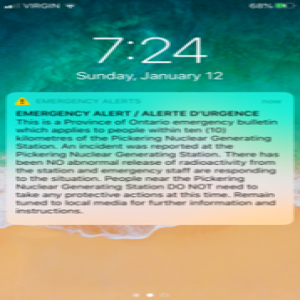
"On the broken emergency alert system" From February 21, 2020. When a false "emergency alert" was sent out suggesting there had been an incident at a nuclear power station near Toronto on January 12th, it took 43 minutes for a correction. When a false alert -- including information that it was not a drill -- about an incoming missile was issued in Hawaii, it took 38 minutes for a correction to come out. How the Pickering nuclear alert was sent out in error almost does not matter any more. What still matters six weeks later is the lack of public information about who should have done what when the message came out; and why and how so many individuals and organizations were so slow to react. For educational purposes.
For more on the role of local radio in times of local crisis please listen to Season 1, Episode 6; and for more on being prepared for an emergency and the necessity of battery-powered radio, please listen to Season 1 Episode 3.
Feb 13, 2020
Feb 13, 2020
10 min
"On World Radio Day - 2020". From February 13, 2020. UNESCO -- the United Nations Educational Scientific Cultural Organization -- designates February 13th "World Radio Day" dating back to 2011. It's more than a celebration of the ongoing vitality and lifeline nature of radio; it's also a time for critical thought about some aspect of radio. This year's theme is "diversity" in radio, according to three broad criteria. Today: an insider's look at diversity in radio in Toronto. The city itself has about 50 over-the air licensed broadcast radio stations: nearly 30 FM radio stations and about 20 on AM. How do they measure up to the UNESCO criteria? My insider's observations.